
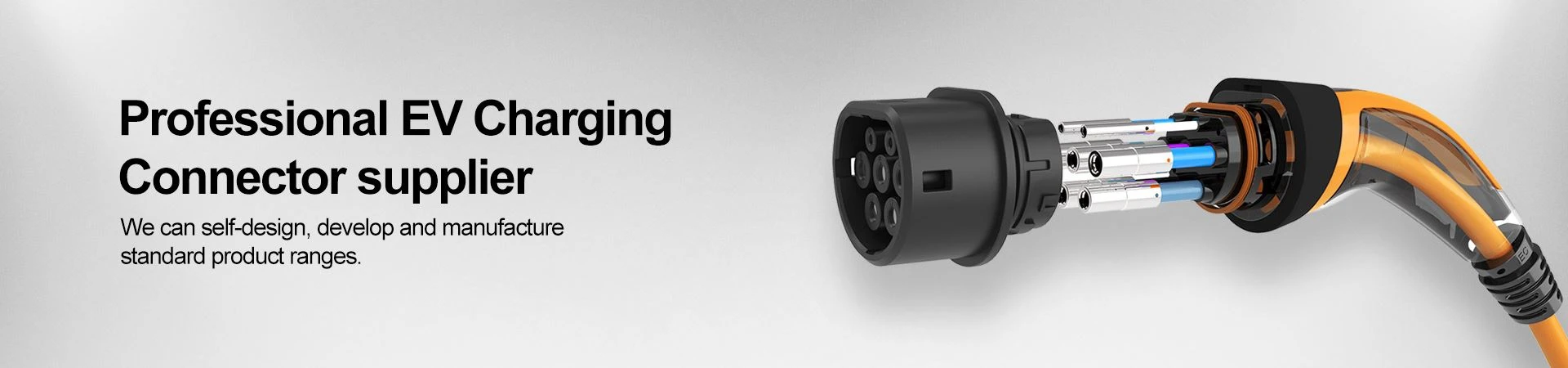
EV Charging Adapters
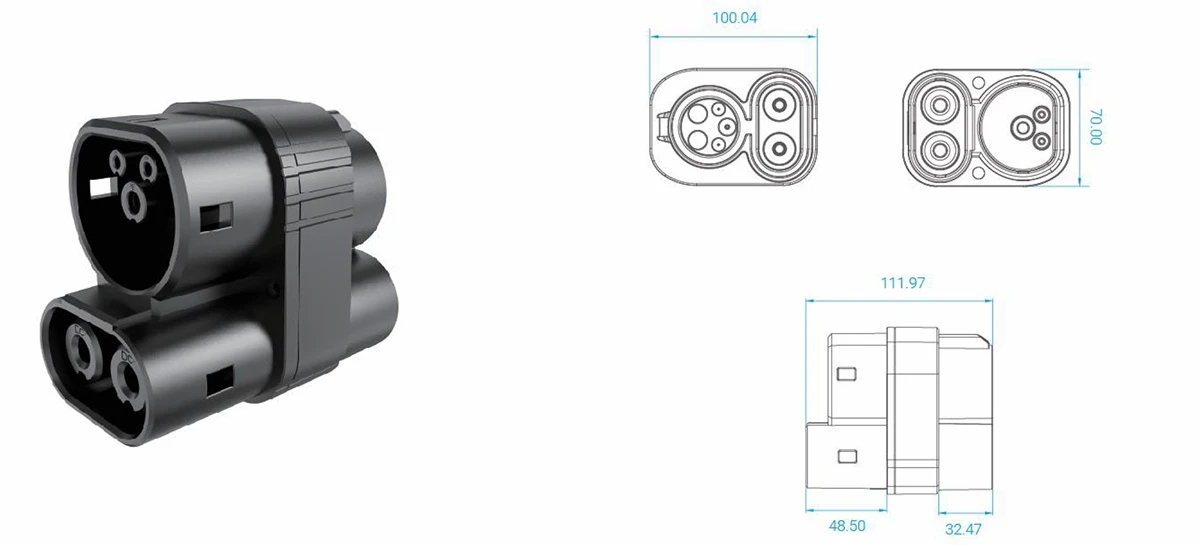
As a professional EV charging adapter manufacturer, we provide reliable and high-quality adapters designed to ensure seamless compatibility between different charging standards. Our adapters support Type 1, Type 2, CCS, and GB/T interfaces, allowing flexible use across various EV models and charging stations. Built with premium materials and advanced safety protection, they deliver stable conductivity, heat resistance, and long service life. We also offer OEM and customized EV charging adapters to meet regional requirements and commercial applications.
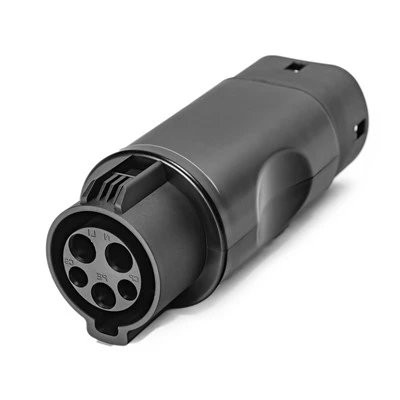


Product Performance
|
Rated Current |
150A |
|
Rated Voltage |
1000V DC |
|
Contact Resistance |
0.5mΩ Max |
|
Operating Temperature |
-30℃-+50℃ |
|
Insulation Resistance |
>500MΩ |
|
Terminal Temperature Rise |
<50K |
|
Protection Rating |
IP54 |
|
Flammability Rating |
UL94V-0 |
|
Casing Material |
Thermoplastic |
|
Terminal Material |
Copper alloy,silver plated |
|
Plug Lifespan |
>5000 Mating Cycles |
|
Standards |
IEC62196-3:2014 |
|
Certification |
CE |
|
Warranty |
24 months/10000 Mating Cycles |
Your Trusted Partner for OEM and Custom EV Charging Adapters
Material
Often made from thermoplastic materials and TPU cables, which are both eco-friendly and durable.
01
Compatibility
Works with most electric cars equipped with DC inlet sockets, showcasing its wide applicability.
02
Customization Options
Allows for personalized cable length and branding options.
03
Fast Charging Capability
Equipped with advanced electronics allowing for high DC current, enabling fast charging.
04
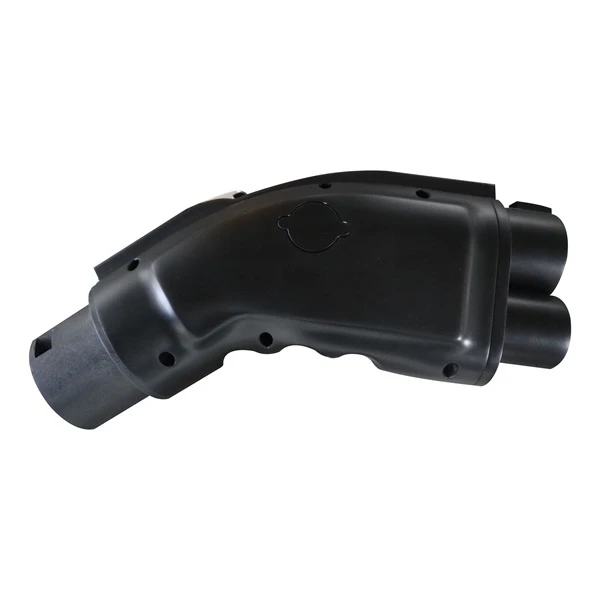
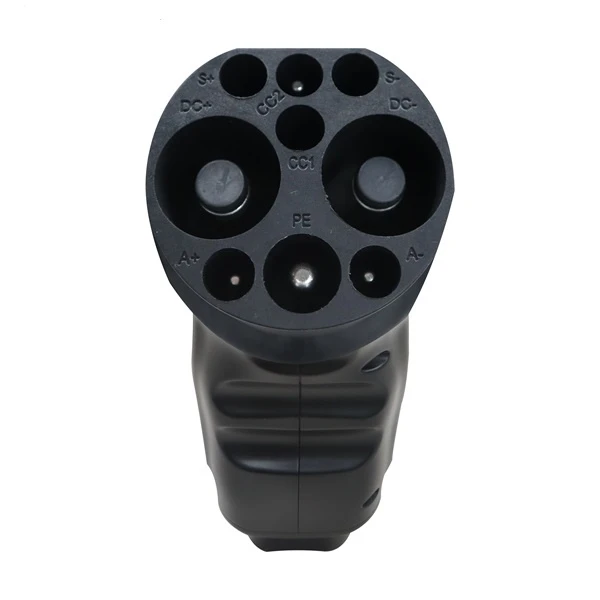

Applications
On-the-Go Charging
Enables EV owners to charge their vehicles outside designated charging stations, enhancing convenience during travel.
Compatibility Across Brands:
Works with various electric car models, making it a universal solution for different EV owners.
Customized Solutions
Offers customizable cable lengths and branding options, catering to specific user preferences and corporate branding needs.
Versatile Charging Solution
Useful in locations where only specific EV charging plugs are available, ensuring EV owners can charge their vehicles regardless of infrastructure limitations.
Advantages of EV Charging Adapters
Versatility in charging options
EV charging adapters provide users with the flexibility to connect their electric vehicles to various charging stations with different connector types. This versatility ensures compatibility with diverse charging standards, including Type 1, Type 2, CCS, CHAdeMO, and Tesla connectors, expanding charging options for EV owners.
Adaptation to evolving infrastructure
As the EV charging infrastructure continues to evolve, adapters enable electric vehicle owners to adapt to new connector standards without the need for extensive modifications or upgrades. This adaptability future-proofs the charging capabilities of EV, allowing them to stay compatible with emerging technologies.
Convenient travel and cross-compatibility
For EV owners who frequently travel or use public charging networks, adapters offer convenience by facilitating charging at various locations. They bridge the gap between different charging station standards, making it easier for users to access charging infrastructure regardless of the connector types available.
Transition between electric vehicle models
As electric vehicle manufacturers may use different connector standards, EV charging adapters ease the transition for users switching between electric vehicle models with distinct charging ports. This adaptability ensures a seamless charging experience, irrespective of the specific requirements of the new EV.
Cost-effective
Rather than investing in multiple charging cables for different standards, EV owners can use adapters as a cost-effective solution to achieve compatibility. Adapters provide a more economical way to access diverse charging networks without the need for additional, dedicated charging cables.
Increased charging station accessibility
With EV charging adapters, users gain increased accessibility to a broader network of charging stations. This is particularly beneficial in areas where a mix of connector types is prevalent, allowing EV owners to charge conveniently and efficiently at various locations, promoting the widespread adoption of electric vehicles.
How to Choose The Right EV Charging Adapters
Understand your EV charging port
Identify the charging port and standard used by your specific electric vehicle. Whether it's Type 1, Type 2, CCS, CHAdeMO, or Tesla connectors, knowing your EV charging specifications is crucial.
Research adapter compatibility
Research and select an EV charging adapter that is explicitly designed to work with your EV charging port and the standards prevalent in your region. Check the compatibility list provided by the adapter manufacturer.
Consider charging speeds
Take into account the charging speed supported by both your EV and the adapter. Some adapters may have limitations on charging speeds, and choosing one that aligns with your EV capabilities ensures optimal charging performance.
Check charging station compatibility
If you plan to use the adapter at public charging stations, verify that the adapter is compatible with the charging stations available in your area. Different stations may have varying connector types, so a versatile adapter is advantageous.
Review safety features
Prioritize adapters with built-in safety features such as overcurrent protection and temperature monitoring. Ensuring the adapter meets safety standards enhances the reliability and safety of your charging sessions.
Consider future compatibility
If you anticipate switching to a different electric vehicle with a different charging standard, choose an adapter that provides versatility across multiple connector types. This future-proofs your charging capabilities.
Which Connectors Can Be Used With EV Charging Adapters?
Type 1 connectors
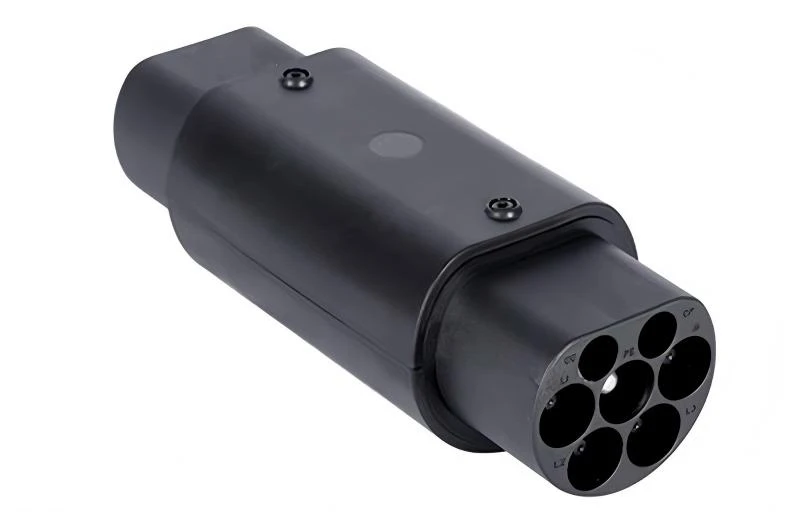
EV charging adapters can be designed to work with Type 1 connectors, which are commonly used in electric vehicles in regions like North America and parts of Asia. These connectors have a single-phase design and are suitable for Level 1 and Level 2 charging.
Type 2 connectors
Adapters may also support Type 2 connectors, widely used in Europe and becoming more prevalent globally. Type 2 connectors can accommodate both single-phase and three-phase charging, making them versatile for various charging scenarios.
CHAdeMO connectors
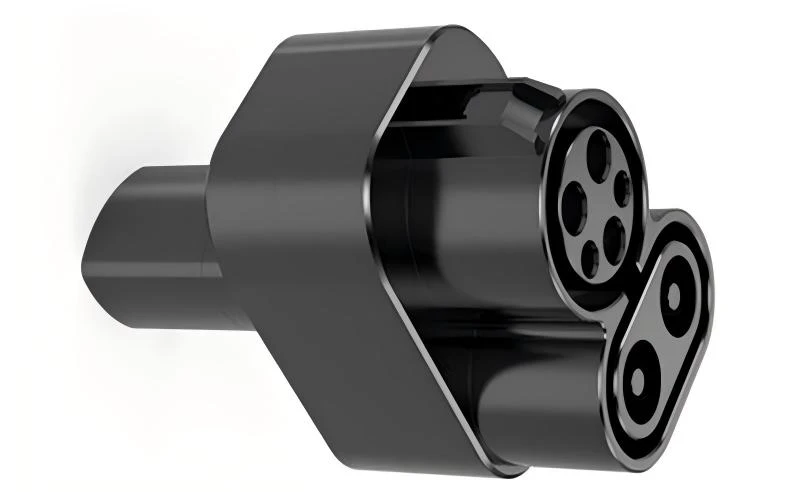
Some EV charging adapters are compatible with CHAdeMO connectors, often used in fast-charging stations. CHAdeMO is commonly found in electric vehicles from Japanese manufacturers and supports high-power DC fast charging.
Tesla connectors
Adapters can be specifically designed for Tesla connectors, allowing electric vehicle owners to use non-Tesla charging stations. Tesla connectors are proprietary, and adapters facilitate compatibility with a broader range of charging infrastructure.
Components of EV Charging Adapters
Enclosure
The enclosure houses and protects the internal components of the adapter. It is often constructed from durable materials, providing resistance to environmental elements and physical impact.
Connector
The connector is a crucial component that interfaces with the electric vehicle's charging port. It is designed to match the specific connector type of the EV and the charging station, ensuring a secure and reliable connection.
Cable
The cable facilitates the transmission of electrical power from the charging station to the electric vehicle. It is typically made of durable materials to withstand frequent use and environmental conditions.
Control unit
The control unit manages the charging process, facilitating communication between the adapter, charging station, and electric vehicle. It plays a role in determining the optimal charging rate and monitoring safety features.
Internal electronics
Internal electronics include the circuitry and components responsible for converting and regulating the electrical power from the charging station to a form suitable for the electric vehicle's battery. This ensures efficient and safe charging.
Safety features
Safety features integrated into the adapter may include overcurrent protection, temperature monitoring, and short circuit protection. These features enhance the safety and reliability of the charging process.
FAQ
Q: What is an EV charging adapter, and what is its primary function?
Q: How do I choose the right EV charging adapter for my electric vehicle?
Q: Can any EV use any EV charging adapter interchangeably?
Q: What are the common connector types that EV charging adapters support?
Q: How does an EV charging adapter contribute to charging station accessibility?
Q: Are there safety features integrated into EV charging adapters?
Q: Can I use an EV charging adapter in extreme weather conditions?
Q: What is the role of the control unit in an EV charging adapter?
Q: How long does an EV charging adapter typically last?
Q: Can I charge my electric vehicle at home without an EV charging adapter?
Q: What precautions should I take when using an EV charging adapter in cold weather?
Q: How can I prevent my EV charging adapter from overheating during charging sessions?
Q: Can I leave my electric vehicle connected to the EV charging adapter after it's fully charged?
Q: What is the difference between a Level 1 and Level 2 EV charging adapter?
Q: Can I charge my electric vehicle using an EV charging adapter at any public charging station?
Q: Can an EV charging adapter be used with solar panels or renewable energy sources?
Q: How does an EV charging adapter compare to using public charging stations?
Q: What are the considerations for choosing an EV charging adapter for travel and cross-country trips?
Q: Can an EV charging adapter be used for fast-charging at high-power charging stations?
Q: What measures should be taken to prevent damage to an EV charging adapter during storage?
As one of the best ev charging adapters manufacturers and suppliers in China, we warmly welcome you to wholesale cheap ev charging adapters from our factory. All our products are with high quality and competitive price.
charging car from home socket, tesla power outlet in car